
Healthy Pregnancy Diet Plan – What to Eat Month by Month
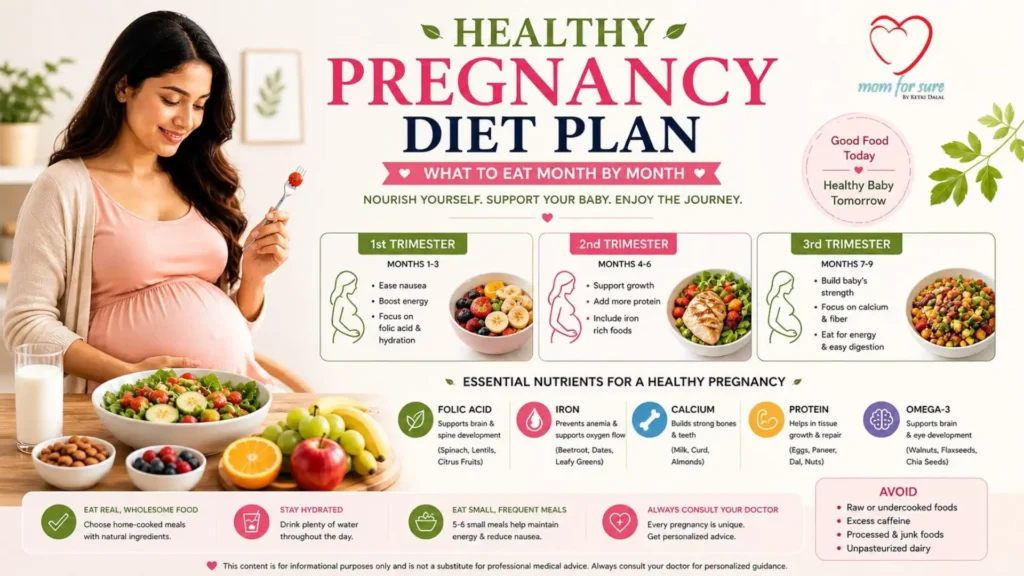
A healthy pregnancy diet plan is one of the most important foundations for your baby’s growth and your own well-being. Knowing what to eat at each stage helps you stay nourished, avoid confusion, and support a smooth pregnancy journey from start to finish.
Whether you’re newly pregnant or planning ahead, this guide breaks everything down simply – month by month, nutrient by nutrient.
Why a Healthy Pregnancy Diet Plan Matters
During pregnancy, your body is doing extraordinary work. Nutrition directly impacts:
- Baby’s brain and organ development
- Healthy birth weight
- Mother’s energy levels and immunity
- Risk reduction for complications
A well-balanced diet isn’t about eating more – it’s about eating right.
Essential Nutrients During Pregnancy
Before diving into month-wise planning, let’s understand what your body actually needs.
1. Folic Acid
Supports early brain and spine development
Found in: spinach, citrus fruits, lentils
2. Iron
Prevents anemia and supports oxygen flow
Found in: beetroot, dates, leafy greens
3. Calcium
Strengthens baby’s bones and teeth
Found in: milk, curd, almonds
4. Protein
Supports tissue growth and repair
Found in: eggs, paneer, legumes
5. Omega-3 Fatty Acids
Essential for brain development
Found in: walnuts, flaxseeds
First Trimester Diet (Months 1–3)
This phase is all about adjustment. Hormonal changes can affect appetite and digestion.
Focus on:
- Small, frequent meals
- Light and easy-to-digest foods
- Staying hydrated
Best foods:
- Bananas, toast, soups
- Coconut water
- Dry fruits in moderation
Avoid:
- Oily and spicy foods
- Long gaps between meals
Second Trimester Diet (Months 4–6)
Energy returns and your baby starts growing rapidly.
Focus on:
- Protein-rich meals
- Iron intake
- Balanced nutrition
Best foods:
- Dal, paneer, eggs
- Green vegetables
- Whole grains
Tip:
This is the best phase to build strong nutrition habits.
Third Trimester Diet (Months 7–9)
Now, your baby is gaining weight and your body needs sustained energy.
Focus on:
- Calcium and fiber
- Energy-rich foods
- Easy digestion
Best foods:
- Milk and dairy
- Fruits and vegetables
- Nuts and seeds
Avoid:
- Heavy meals late at night
- Excess sugar and processed foods
Foods to Avoid During Pregnancy
Some foods can increase risks and should be limited or avoided.
- Raw or undercooked meat
- Unpasteurized dairy products
- High caffeine intake
- Packaged junk food
- Street food with hygiene concerns
Common Mistakes to Avoid
Even with good intentions, these mistakes are very common:
1. Eating for Two
You don’t need double quantity – just better nutrition.
2. Skipping Meals
Leads to low energy and nausea spikes.
3. Ignoring Hydration
Water is as important as food.
4. Following Random Diet Advice
Every pregnancy is different – avoid generic trends.
Pro Tips for a Healthy Pregnancy Diet
- Plan meals in advance
- Prioritize home-cooked food
- Keep healthy snacks handy
- Listen to your body’s signals
- Stay consistent, not perfect
Simple Daily Pregnancy Diet Example
Morning: Warm water + soaked almonds
Breakfast: Oats / poha + fruit
Mid snack: Coconut water
Lunch: Roti + dal + sabzi + salad
Evening: Fruit / light snack
Dinner: Light home meal + milk
FAQs – Healthy Pregnancy Diet Plan
What is the best pregnancy diet plan?
A balanced diet including protein, iron, calcium, and vitamins is ideal. It should be simple, home-based, and consistent.
How many meals should I eat during pregnancy?
Small meals 5–6 times a day help maintain energy and reduce nausea.
Which fruits are best during pregnancy?
Bananas, apples, oranges, and pomegranates are great choices.
Can I follow a strict diet during pregnancy?
No. Pregnancy is not the time for restrictive dieting. Focus on nourishment, not weight loss.
Final Thoughts
A healthy pregnancy diet plan is not about perfection – it’s about consistency and awareness. When you nourish your body well, you support not just your baby’s growth, but your own strength and recovery too.
Take it one meal at a time. Keep it simple. Stay mindful.
⚠️ Disclaimer
This article is for informational purposes only and is not a substitute for professional medical advice. Always consult your doctor or nutritionist for personalized guidance.
🔗 Important Links
- Explore more at https://momforsure.com/blog/
- Check our collections: https://momforsure.com/collections/
- Size help: https://momforsure.com/size-guide/